
Genesis Systems International designs and builds advanced software systems for defence and national security.
We develop security architectures, intelligent systems and mission-focused software designed for environments where conventional approaches to infrastructure, autonomy, communication and security are no longer sufficient.
Our work brings together AI systems, autonomous architectures, cybersecurity, resilient infrastructure and advanced systems engineering to address complex problems across defence, national security and critical infrastructure.
We build systems for the environments of tomorrow - engineered for uncertainty, resilience and human control.

Engineering beyond conventional boundaries. Genesis Systems International develops software architectures for complex, uncertain environments — bringing together systems engineering, cybersecurity, AI and resilient infrastructure under human oversight.

Software should not be constrained by the platform beneath it. We develop agnostic architectures and interfaces capable of connecting diverse systems, technologies and information sources without becoming dependent on a single underlying platform.
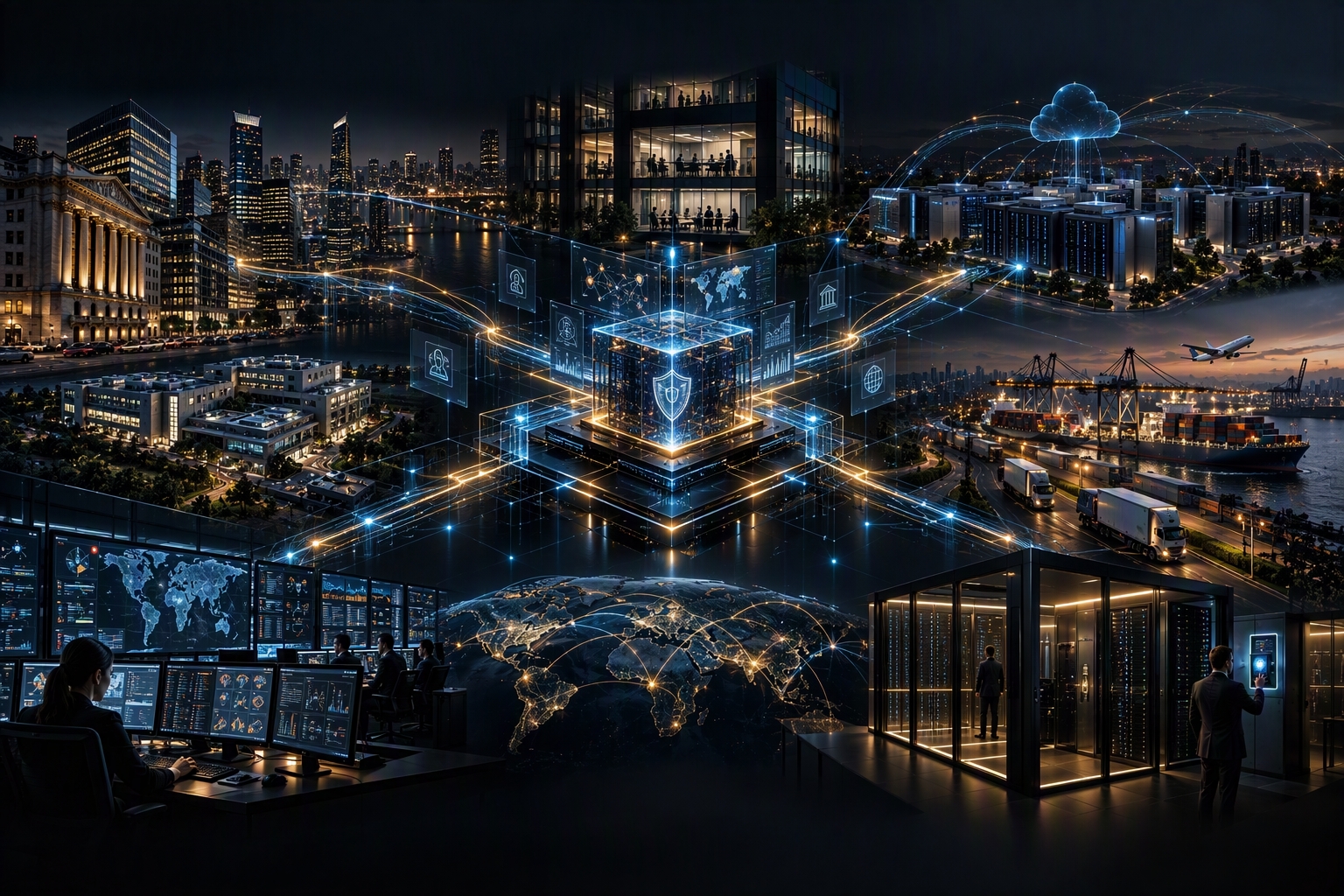
The same architectural principles apply across critical commercial environments. Financial institutions, corporate networks, secure computing environments, supply chains and distributed infrastructure increasingly depend on secure connectivity and trusted information. We develop software architectures designed to connect these environments while maintaining security, controlled access, resilience and operational visibility.

Beyond conventional boundaries.

Stateless States explores the design of systems, architectures and environments that operate beyond traditional assumptions about infrastructure, identity, control and state.

Architecture becomes the environment.
Stateless States is a systems-oriented approach to designing environments in which architecture is not merely the infrastructure beneath a system, but an active component of how that system operates, communicates, adapts and is governed.
Environment
Systems are shaped by the environments in which they operate, rather than treated as isolated components.
State
State, persistence and continuity become architectural considerations rather than assumptions.
Intelligence
Intelligent systems operate within defined boundaries, observation mechanisms and governance structures.
Security
Security can be embedded into the environment itself instead of relying exclusively on perimeter controls.
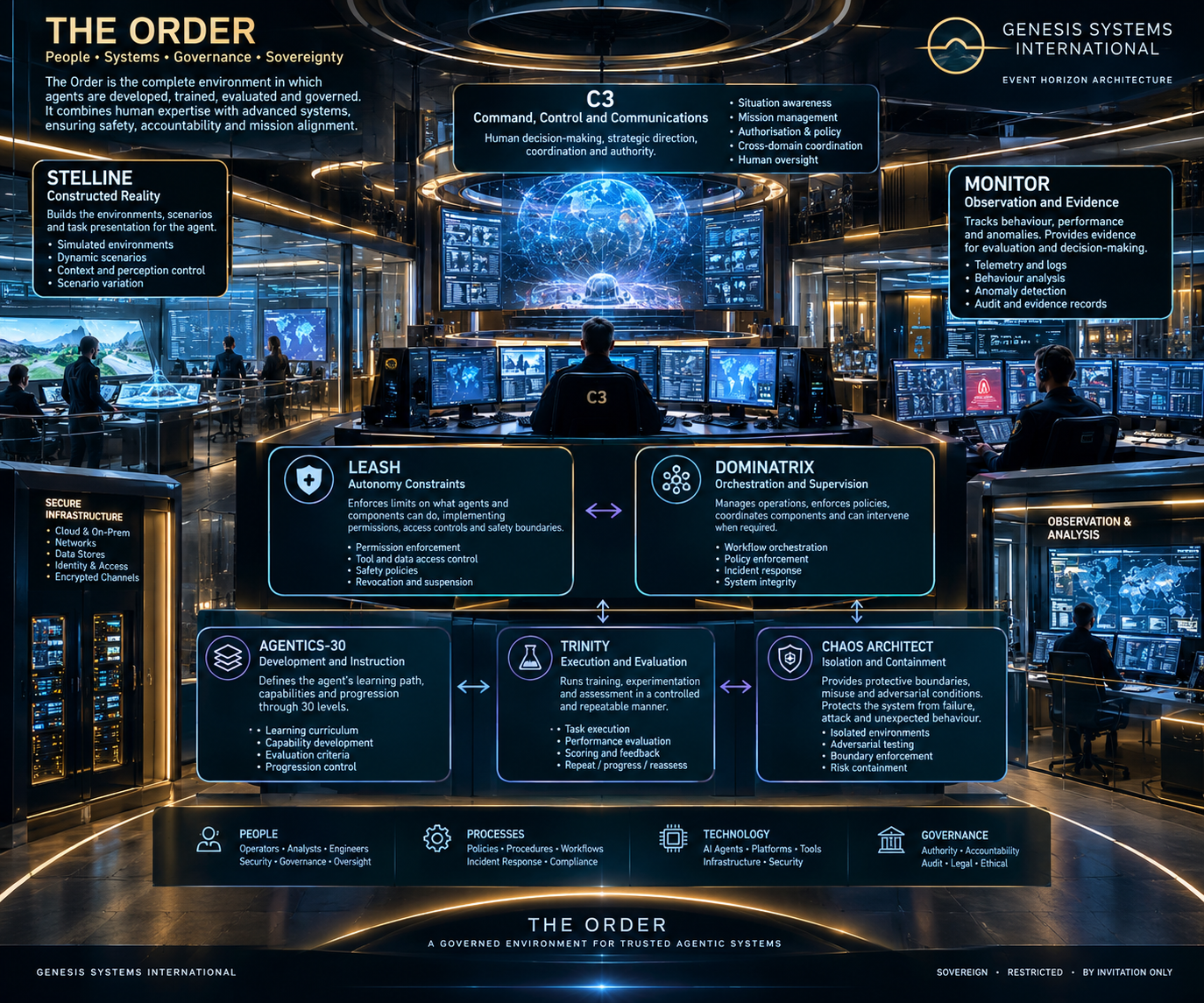
The Order

A secured, enclosed environment for Agentic systems. The Order is a structured environment designed for the development, training, observation and controlled operation of Agentics. Rather than treating security, monitoring, training and development as separate functions, The Order brings them together within a single enclosed architecture. Each layer has a distinct purpose while contributing to the security and behaviour of the environment as a whole. Within The Order, Agentics can be developed and exercised inside defined boundaries, with the surrounding architecture providing mechanisms for security, supervision, monitoring, training, experimentation and controlled interaction.
TRINITY
The core architectural framework that establishes the relationship between the constituent layers of The Order.
DOMINATRIX
The governance and authority layer responsible for supervising autonomous behaviour and enforcing architectural boundaries.
MONITOR
The observation and compliance layer that observes system behaviour and provides information to the governing architecture.
CHAOS ARCHITECT
The environmental security layer of The Order, designed to make stable prediction and environmental mapping unreliable as a basis for controlling or exploiting the system.
STELLINE
The operational reality layer of The Order, controlling how environmental information is represented and presented to Agentic systems without exposing the underlying environment directly.
AGENTICS-30
The training and development framework of The Order, providing 30 structured levels for developing, testing and differentiating Agentic systems, capabilities and behaviours.